Clinical deterioration begins long before an unplanned ICU transfer. The earliest warning signs emerge on the floor, often hours in advance.
Assisting care teams detect patient deterioration early, respond faster, and prevent ICU escalation.
Why early patient deterioration can go unnoticed

Atypical warning signs may be subtle. Patients may appear stable on the surface while the data tells a different story.

By the time RRT gets called, the window for early intervention may have closed. Escalation to ICU may not be avoidable.

Charting happens after the fact—reconstructed from memory and timestamps rather than captured as patient care unfolds.
How Foresia Turns Early Signs into Actionable Alerts
Monitor
Continuously monitors each patient for early signs of deterioration.
Detect
Evaluates latest vitals along with their trends to identify early deterioration before it worsens.
Notify
Notify the right care team in real time, eliminating slow phone and pager chains.
Document
Document in real time, detection to intervention, team actions, responses, and outcomes for future review, junior nurse training, and quality improvement initiatives.


Empowering Clinicians and Hospital Leadership
Helps nurses recognize patient deterioration and activate the appropriate response: a Pre-Rapid Response (PRRES) or Rapid Response Team (RRT).
AI-assisted Alert with insights and their own clinical judgment supports nurse confidence in activating the needed response.
AI-assisted clinical insights transform complex patient information into meaningful insights that support faster, better-informed clinical decisions.
Automates aspects of clinical documentation, allowing nurses to spend less time on administrative tasks and more time caring for patients.
Generates a patient handoff report at shift end summarizing important changes in the patient's condition to enabling smooth transition for incoming nurses.
Facilitates structured communication in real-time through SBARI workflows and secure messaging, helping care teams share critical information and coordinate appropriate responses.

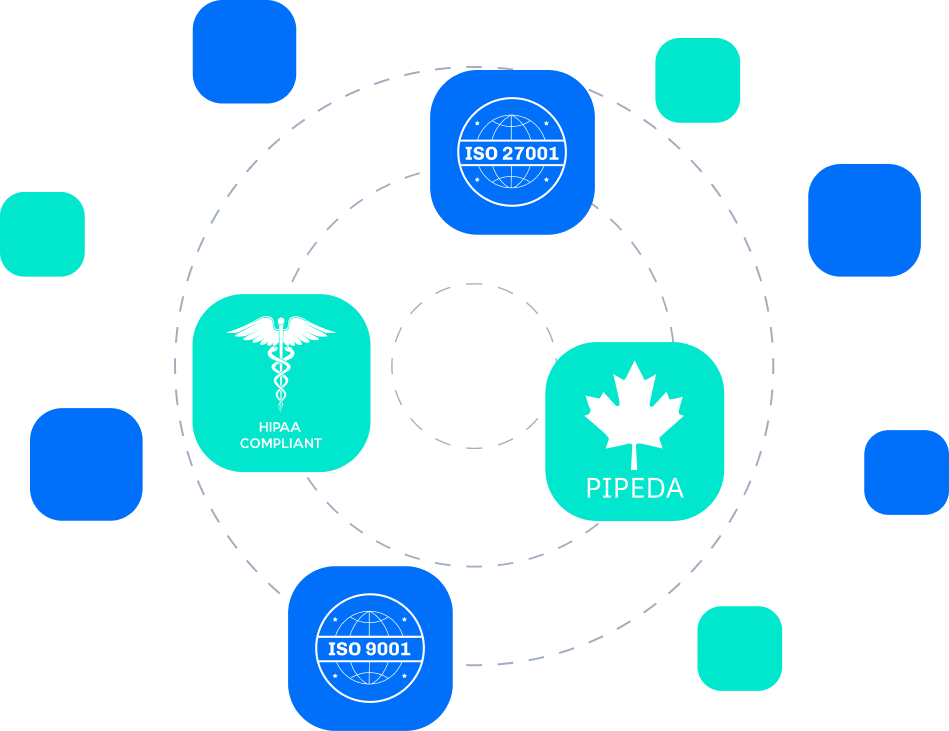
Hospital-ready security and compliance

Enterprise security architecture
Patient identifiers and clinical data are encrypted at rest and in transit using industry-standard encryption. HL7/FHIR-based EHR integration, role-based access control, and comprehensive audit logging support every clinical interaction.

Regional data residency
Deployment supports on-premises, cloud, or sovereign-cloud configurations aligned with hospital requirements. Data residency options can be tailored to your jurisdiction.
Advancing Healthcare With Trusted Partners